For colleges and universities · 027.7
Course reserves, serials, e-resources and interlibrary loan beside a fast circulation desk, with the collection and usage data that accreditation reviews ask for.
Sound familiar?
Semester after semester
Reserves change every term. Putting the right copies behind the right course should take minutes, not an afternoon.
Journals that go missing
Serial issues arrive late or not at all. Prediction, claims and routing should be in the system, not in a spreadsheet.
The report season
Accreditation and annual reports want collection counts, usage and accession data. Pulling them should not need a developer.
Systems built for someone else
Some are heavy to host, some are dated, and some assume a consortium you do not have.
What you get
Course reserves
Courses, instructors and reserve items with temporary rules, surfaced on OPAC course pages.
Learn moreSerials that predict themselves
Frequency-based prediction, receiving, claims and routing.
Learn moreAcquisitions with GST
Vendors, funds, baskets, orders, receiving and invoices with GST arithmetic.
Learn moreE-resources and ILL
Track e-resources and run interlibrary loan alongside print.
Learn moreReports and export
A guided builder, 34 built-in reports and CSV or Excel export.
Learn moreOut of Koha, in a day
If you are on Koha today, the import carries your records, members and rules.
Learn moreIn India
- Supports the data you need for NAAC- and UGC-style reporting: collection counts, circulation and usage statistics, accession numbers (this is not a certification, and ready-made accreditation packs are planned)
- Fines in INR, UPI and Razorpay payments, numbered receipts
- Hindi and English interface; Devanagari-friendly search for regional-language holdings
- GST arithmetic on acquisitions invoices
The real thing
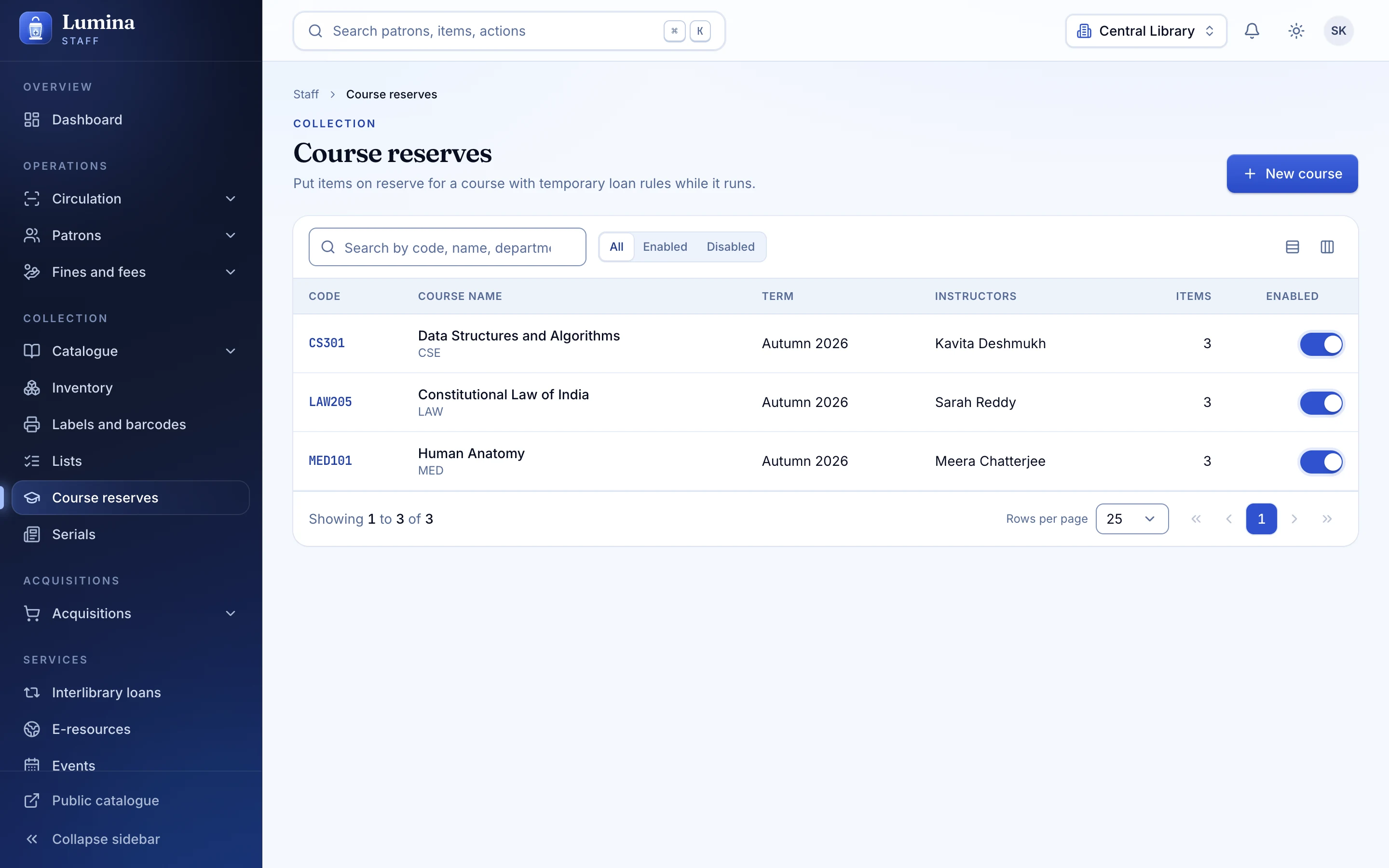
Course reserves
Reserves with temporary rules.
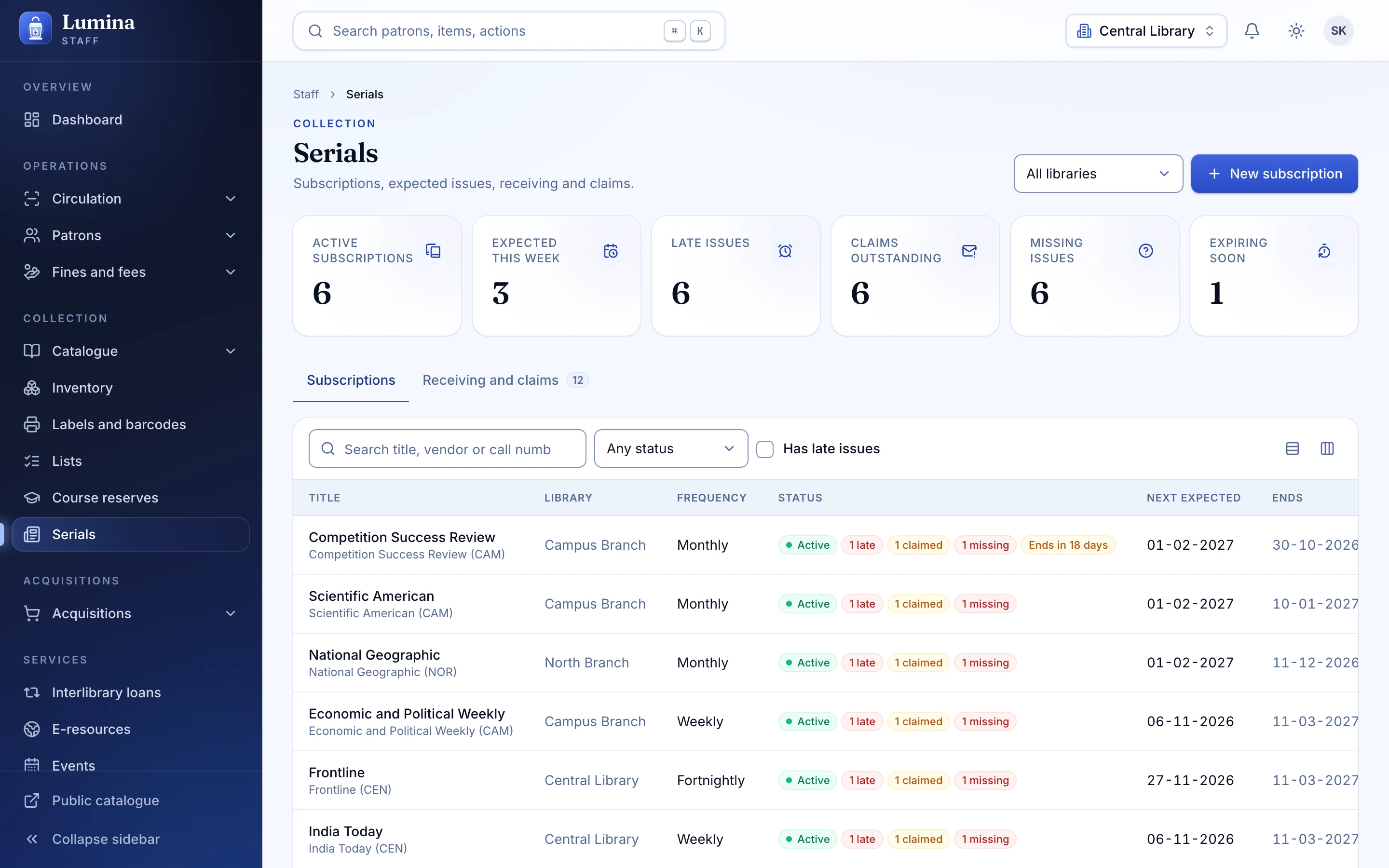
Serials
Prediction and receiving.
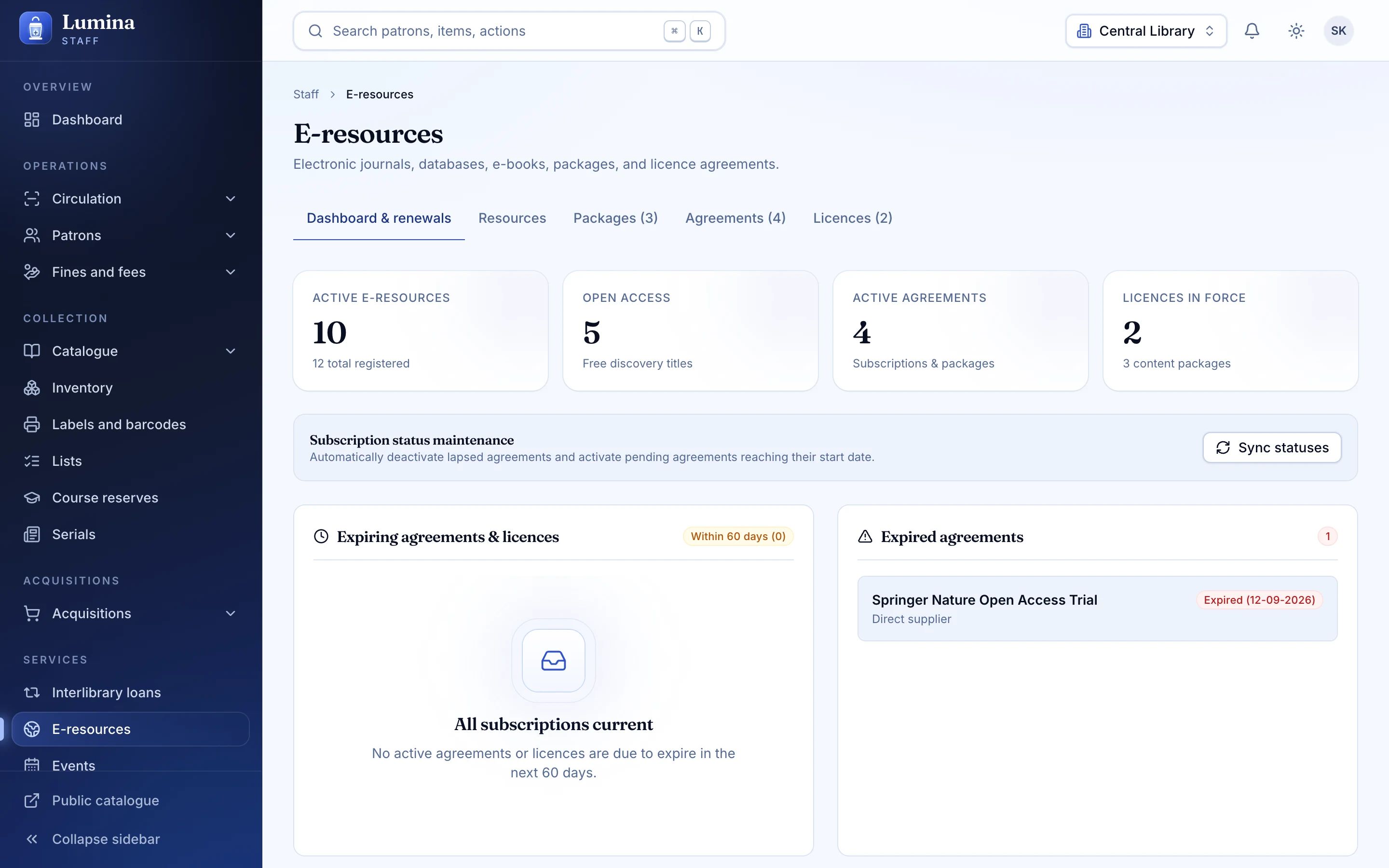
E-resources
Licences and access, tracked.
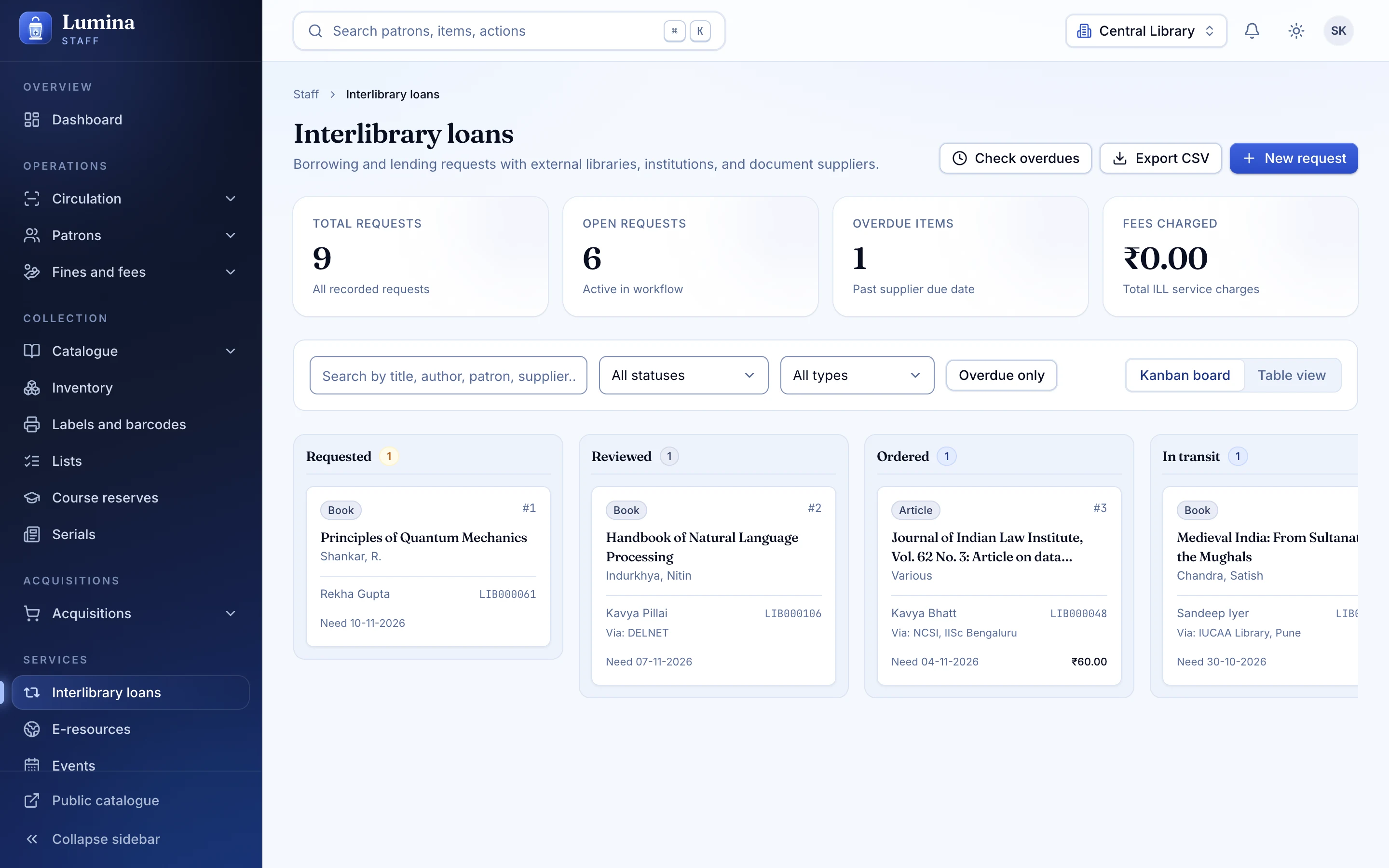
Interlibrary loan
Requests in, requests out.
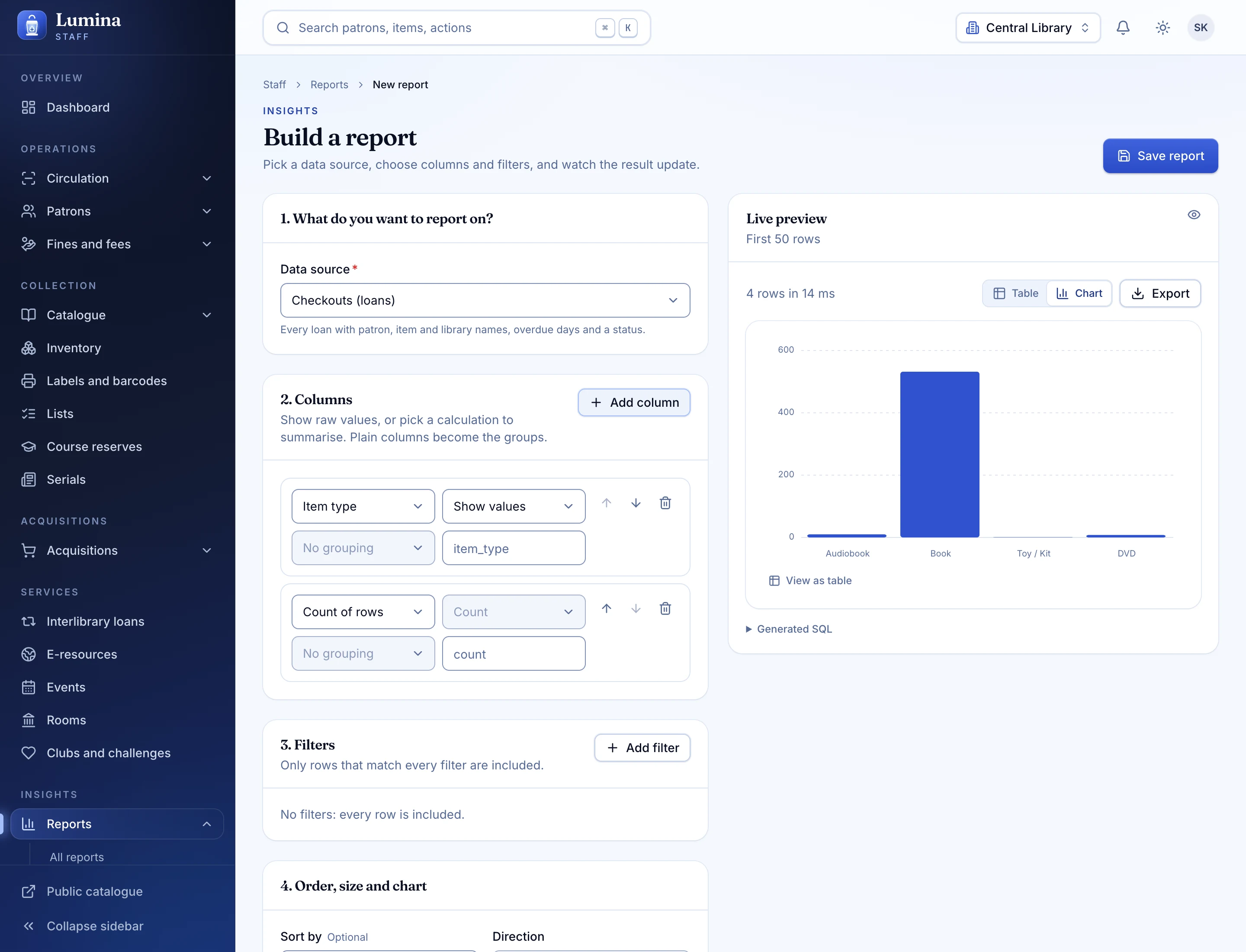
Report builder
Ask the data without SQL.
Questions
Does it produce NAAC reports?
It supports the data you need: counts, statistics and accession numbers, with a report builder and Excel export. It does not certify anything, and ready-made accreditation packs and scheduled report e-mails are on the roadmap, not built.
Can we connect to a campus single sign-on?
Not yet. Single sign-on (OIDC, CAS, LDAP, Shibboleth) is planned. Today members sign in with their card, user id or email, with optional two-factor for staff.
Next step
See your library in Lumina.
Thirty minutes, your questions, and a walk through the desk, the catalogue and the Koha import. No slides.